
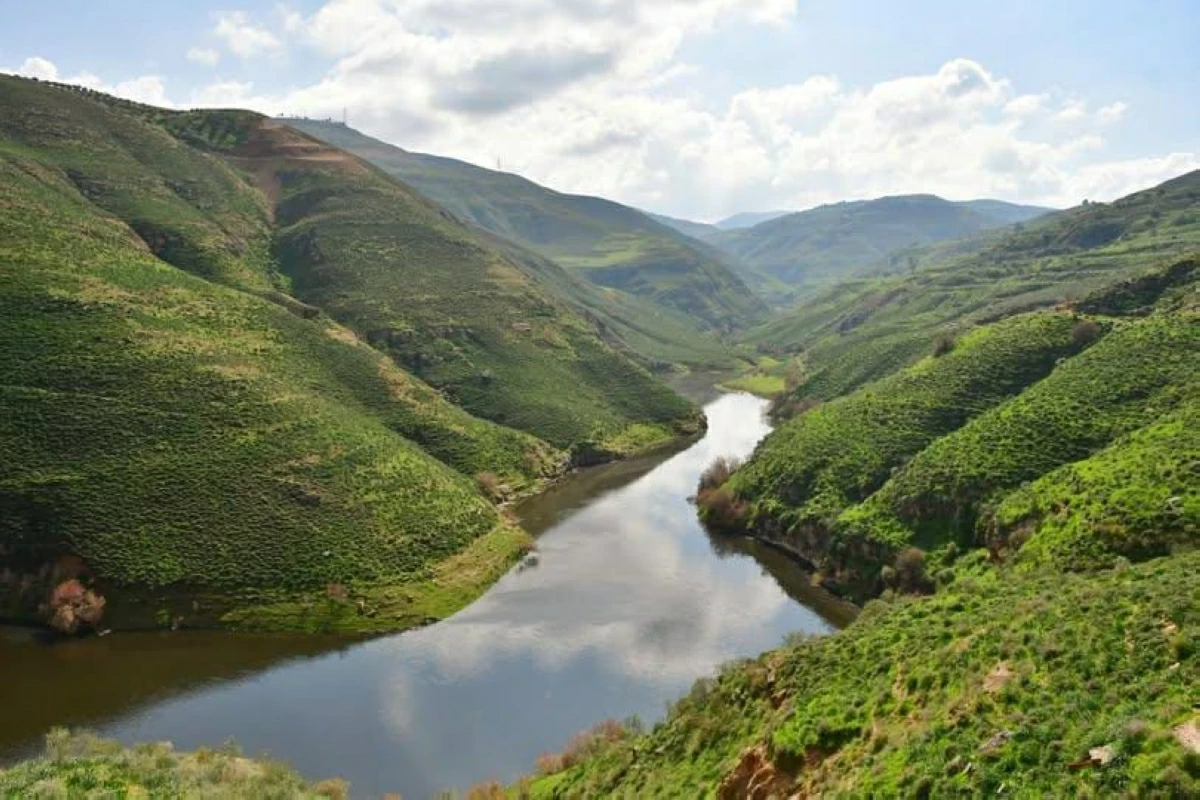
AMMAN – Jordan’s 2025–2026 rainy season has exceeded the long-term average by more than 130 per cent, officials said, significantly improving water storage, replenishing groundwater reserves and raising expectations for a strong agricultural season.
In remarks to The Jordan Times on Tuesday, Ministry of Water spokesperson Omar Salameh described the season as “excellent,” noting that Jordan’s long-term annual rainfall average is about 8.1 billion cubic metres.
He said most of the Kingdom’s 16 main dams have reached full storage capacity following successive rainfall across the country.
However, dams in the north have yet to fill completely, as rainfall has been concentrated mainly in the south, east and central regions, he added.
The Wahda Dam in northern Jordan has so far received limited inflows this season, Salameh said, expressing hope that storage levels will improve before the end of the rainy season.
“Current indicators point to a promising agricultural season and may help the ministry better meet summer drinking water demand than in previous years,” he added.
Improved rainfall is also expected to strengthen water and food security while easing pressure on groundwater basins, which have shown noticeable recovery due to abundant precipitation.
Salameh said that rainfall has improved groundwater levels and water quality in most basins.
He added that most of the Kingdom’s 650 dams and desert reservoirs, with a combined storage capacity exceeding 150 million cubic metres, are now full, alongside tens of thousands of rainwater harvesting wells in homes and farms across most governorates.
Director General of the Jordan Meteorological Department Raed Khattab said the season’s rainfall is unusually high compared with the average for the same period, following five years of fluctuating weather patterns.
He explained that recent years have been marked by increased atmospheric instability, fewer low-pressure systems and a rise in extreme weather events, including heatwaves, flash floods and droughts, with record temperatures recorded at most monitoring stations.
Khattab warned that as greenhouse gas emissions continue to rise, such extreme events are likely to become more frequent.
“While rainfall variability is typical in Jordan’s semi-arid climate, precipitation is increasingly falling in short, intense bursts — a trend that is becoming a defining feature of the Kingdom’s changing climate,” he said.
Jordan Environment Union President Omar Shoshan said climate change is driving greater volatility across the Eastern Mediterranean, with rising sea temperatures and shifting atmospheric patterns intensifying storms and increasing the likelihood of heavy rainfall over shorter periods.
He warned that Jordan is moving away from relatively stable seasonal patterns towards more extreme and unpredictable conditions, including prolonged droughts followed by intense rainfall.
“While such rainfall can support water security by boosting dam inflows and groundwater recharge, much of it is lost as surface runoff when it falls too quickly,” Shoshan said, underscoring the need for improved water harvesting and flood management.
Climate models and regional assessments indicate that such extreme weather events are likely to become more frequent and intense in the coming decades, he added.
Jordan remains among the countries most vulnerable to climate change due to limited water resources, fragile ecosystems and mounting population pressures, particularly from hosting large refugee communities.
“Climate change is no longer a future risk for Jordan; it is a present reality,” Shoshan said, calling for coordinated action and sustained investment.