
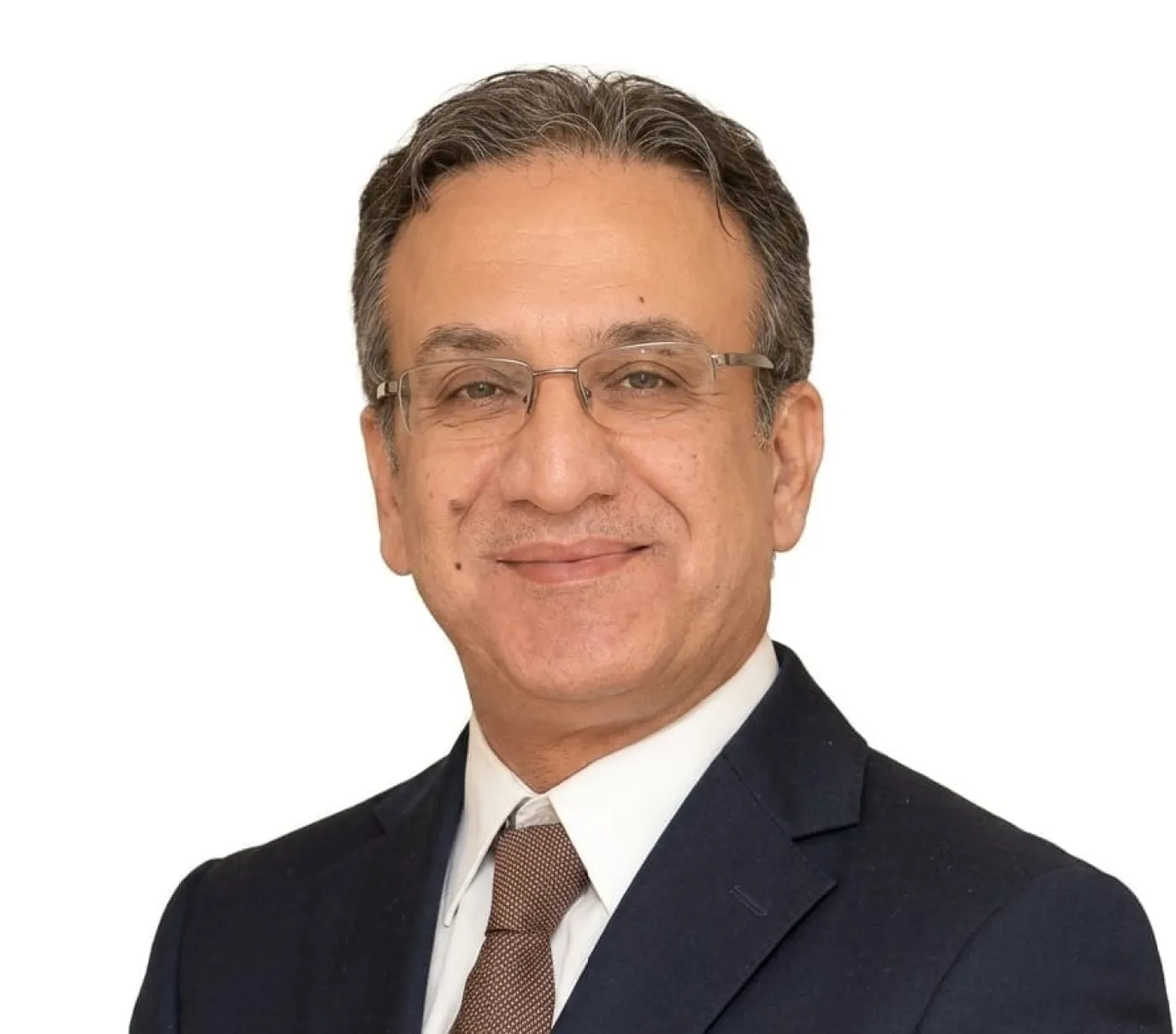
Mustafa Yaghi Writes: You Would Have Been Heard Had You Called Upon the Living — When the King Held Up a Mirror to the World
Amman Now-
Mustafa Yaghi Writes: You Would Have Been Heard Had You Called Upon the Living — When the King Held Up a Mirror to the World
Nothing is more difficult for the world than to hear the truth and then behave as though it had not heard it, and nothing is more dangerous to a just cause than for its tragedy, through constant repetition, to become a familiar scene that passes before people’s eyes without changing anything.
It is from this perspective that His Majesty King Abdullah II’s address before the 81st Session of the United Nations General Assembly can be read. The King did not go to New York to repeat to the world what it already knows, nor did he need to explain to those present what is happening in Gaza, the West Bank, or Syria. Rather, he placed before them a more difficult question: What does it mean for the world to know what is happening, to see it in sound and image, to possess the tools to act, and yet allow it to continue?
That is why His Majesty’s choice of “attention” as the entry point to his speech was not incidental. He noted that the average amount of time a person remains focused on a screen has declined from around two and a half minutes in 2004 to 47 seconds today. He then moved the idea from the world of technology to the world of politics, describing attention as a geopolitical resource, because what the international community chooses to focus on may determine which issue remains on the agenda and which tragedy is pushed to the margins.
Here lies one of the speech’s deepest messages: the world no longer suffers from a lack of information, but from a failure to turn knowledge into action.
We live in an age in which the image of a child beneath the rubble can reach millions of screens within seconds, only to be displaced hours later by another story, another crisis, and another war. Yet the disappearance of a tragedy from the screen does not mean that it has ended, and its departure from the headlines does not return a displaced person to their home, feed a hungry person, or stop a war.
This is why the King’s words carried such significance: “What we neglect today often shapes our future.”
From this idea, the speech moved to the Palestinian cause, as the clearest example of what happens when managing a crisis becomes a substitute for resolving it.
For decades, the Palestinian issue has been treated as a conflict that could be contained and whose consequences could be postponed. One ceasefire after another, negotiations that stop and then resume, and international resolutions and condemnations, while realities on the ground continued to change until what had once been presented as temporary became part of a permanent reality.
This is precisely what the King warned against when he pointed out that the international community had chosen to contain the Palestinian-Israeli conflict rather than confront the challenge of resolving it.
In Gaza, the language of the speech was clear and direct. His Majesty spoke about the victims, the targeting of Jordanian field hospitals, the destruction of infrastructure, and the shrinking space available to Palestinians. Yet he did not separate what is happening in the Strip from what is taking place in the West Bank.
The message was clear: Gaza and the West Bank are not two separate stories. The destruction in Gaza, together with settlement expansion, land confiscation, and de facto annexation in the West Bank, all lead to one political outcome: undermining the possibility of establishing a viable Palestinian state.
At that point, the discussion is no longer only about a war that must stop, but about the future of an entire cause.
The King also returned the discussion to the essence of the conflict when he rejected framing it as a religious conflict, stressing that it is not a war between Islam on one side and Judaism and Christianity on the other, but rather a question of the rights of the Palestinian people, Muslims and Christians alike.
In this context, he recalled the 2002 Arab Peace Initiative, in a clear reminder that the Arab states had, many years ago, presented a political path based on peace and normalization in exchange for ending the occupation and establishing a Palestinian state.
But the speech did not stop at diagnosing the problem. It moved to the more sensitive question: If the world knows, why does it not act?
Here, the speech moved from appeal to accountability.
The King did not say that the international community lacked the means. Rather, he reminded the world that political, economic, and diplomatic tools had been used in other cases, from sanctions and asset freezes to embargoes and diplomatic isolation. The issue, therefore, becomes one of the will to use these tools, not their absence.
This point goes beyond Palestine to the very foundation of the international system itself.
The value of international law is not measured by the number of resolutions and agreements issued in its name, but by its ability to function when its enforcement becomes politically costly. If it becomes strict in one case and open to being bypassed in another, the damage does not affect the victim alone; it also undermines the world’s trust in the entire system.
From Palestine, the King moved to a sphere that directly affects Jordan: Syria, the northern border, and water.
Here, the discussion was no longer merely about Jordan’s diplomatic position toward an external crisis. His Majesty warned against incursions, the imposition of new realities in southern Syria, and interference with water resources. He then drew the line clearly when he affirmed that any threat to Jordan’s northern border or to its water security is a threat to national security, and that Jordan will protect its security, its water, and the interests of its people.
This is a message that leaves no room for ambiguity.
Jordan is a country whose foreign policy has been built on moderation, diplomacy, and dialogue, but at the same time it distinguishes between seeking peace and compromising national interests. The King’s message was therefore clear: commitment to diplomacy must not be interpreted as weakness.
With the discussion of the war involving Iran, the scope of the speech widened. The King linked instability in the region to trade, investment, energy, food, and people’s lives, stressing that modern wars do not remain confined within the borders of the states that fight them.
The Middle East is not an island separated from the world, and its security is not a matter that concerns only its people. When energy, trade, or supply chains are disrupted, the cost reaches economies and populations thousands of kilometers away from the battlefields.
Amid all of this, the speech also presented a clear vision of the role Jordan seeks for itself.
Jordan does not want to live as a hostage to the crises surrounding it. It is working to strengthen its position as a link between the Gulf and the Mediterranean, and as a hub for trade, industry, and technology. At the same time, it confronts terrorism and drug trafficking, develops its defense capabilities, and remains committed to supporting the Palestinians, UNRWA, and the Hashemite Custodianship of the Islamic and Christian holy sites in Jerusalem.
In other words, the equation of the Jordanian state, as reflected in the speech, rests on two parallel tracks: protecting the present and building the future.
This perhaps best sums up Jordan’s overall position. Jordan wants peace, but it does not want a peace built on ignoring the rights of peoples. It wants dialogue, but it does not accept that dialogue be understood as weakness. It remains committed to diplomacy, but it places the security of its borders, its water, and the interests of its people within clear red lines.
At the conclusion of his speech, the King returned to the idea with which he had begun, but from a deeper angle.
The problem was no longer attention alone; it had become one of trust.
Trust between states, trust in agreements, trust that the law will be applied when it is violated, and trust that principles will not change according to the identity of the victim or shifts in media attention.
Here, the full picture of the speech comes together.
It began with 47 seconds, the average span of attention before a screen, and ended with a question concerning the future of the entire international system.
Between the beginning and the end were Palestine, Gaza, the West Bank, Syria, the war involving Iran, Jordan’s water security, UNRWA, Jerusalem, trade, technology, and international law. Yet these were not separate headings. One thread connected them all: What happens when the world recognizes the danger and then becomes accustomed to its existence?
That is why reading the King’s speech merely as a speech about Palestine narrows its meaning, just as reading it merely as a message to Israel is insufficient.
At its core, the speech was a message to the entire international system: it is not enough to know, it is not enough to watch, and it is not enough to issue resolutions. The value of all of this begins when it is translated into a position, into law that is enforced, and into action that prevents the exception from becoming the rule and the temporary from becoming permanent.
Here, the title of this reading regains its meaning:
You would have been heard had you called upon the living,
but there is no life in those whom you call.
Yet the paradox of our age is that the world hears, sees, and knows.
The question is therefore no longer: Did the call reach them?
Rather, the question has become heavier:
If the world has heard everything, seen everything, and possesses the tools with which it can act, what is it waiting for?
Perhaps this was the most important message that remained after the King concluded his speech and left the podium: that the most dangerous thing that can happen to the world is not that crises take it by surprise, but that the warnings are before it, the facts are before it, and the consequences are clear before it, only for it to discover, after it is too late, that what it ignored yesterday is what shaped its reality today.